
AI Risk Management
Training Course
Strengthen AI safeguards, oversight, risk visibility, and responsible organizational protection.

AI Risk Management helps organizations develop risk cohorts, compliance teams, managers, operational leaders, and AI-enabled workgroups that need to protect trust, accountability, and responsible adoption as AI use expands. Anchored in our 4x4 Instructional Design Model℠ and AI-Powered Diagnostic & Customization Framework℠, the course meets participants at the right level, guides practical skill application, and helps teams build the safeguards, oversight habits, and escalation discipline needed to manage AI risk with greater consistency. Depending on selected modular content, customization needs, delivery modality, and client purpose, the experience can range from a focused 90-minute session to a multi-day program of up to three full days, creating a flexible, action-learning pathway for scalable AI risk management capability development. This course can also be stacked within a solution set to support AMS Advisory consulting solutions.
Course Description

Learning Themes
Developing AI risk management capability through selected global learning themes strengthens:
- Enterprise AI Risk Awareness, Ownership, and Accountability
- Responsible Use Guardrails, Sensitive Information Boundaries, and Compliance Practices
- Failure Point Detection, Model Behavior Monitoring, and Escalation Pathways
- Risk Scenario Evaluation, Control Testing, and Prevention Routines
Course Customization
Applying the AI-Powered Diagnostic & Customization Framework℠ and 4x4 Training Design Model℠ calibrates the course for:
- Pre-Training Survey Insights and Cohort Readiness Patterns
- Risk Maturity, Role Mix, and AI Use Case Exposure
- Client Governance Standards, Compliance Requirements, and Responsible-Use Priorities
- Selected Modular Content, Duration, and Delivery Modality
- Scenario, Exercise, Case Example, and Application Emphasis
Applied Learning Outcomes
Converting AI risk management concepts into practical workplace behaviors enables participants to:
- Identify AI Risk Exposure Across Use Cases, Workflows, and Decision Points
- Apply Responsible-Use Guardrails to Protect Confidentiality, Accuracy, and Trust
- Detect Failure Points, Hallucinations, Bias, and Escalation Triggers Earlier
- Document Oversight Practices that Support Governance, Compliance, and Accountability
- Build Repeatable Risk Prevention Routines that Reduce Exposure and Strengthen Adoption


Activity Design
Engaging participants through scenario-driven practice and action-learning activities may include:
- AI Risk Exposure and Use Case Mapping Exercise
- Responsible-Use Guardrail and Sensitive Information Scenario Practice
- Failure Point, Hallucination, and Bias Detection Activity
- Governance Review and Escalation Pathway Workshop
- Control Testing and Risk Response Simulation
- AI Risk Prevention Routine and Action Planning Exercise
Skills in Practice
Applying AI risk management skills enables participants to:
- Identify AI Risk Exposure Across Tools, Workflows, and Decision Points
- Apply Responsible-Use Guardrails to Protect Confidentiality, Accuracy, and Trust
- Recognize Hallucinations, Bias, Failure Modes, and Escalation Triggers Earlier
- Document Oversight Steps that Support Governance, Compliance, and Accountability
- Use Control Testing and Scenario Review to Strengthen AI Safeguards
- Build Repeatable Risk Prevention Routines that Reduce Exposure and Support Adoption
Collaborative Engagement Model
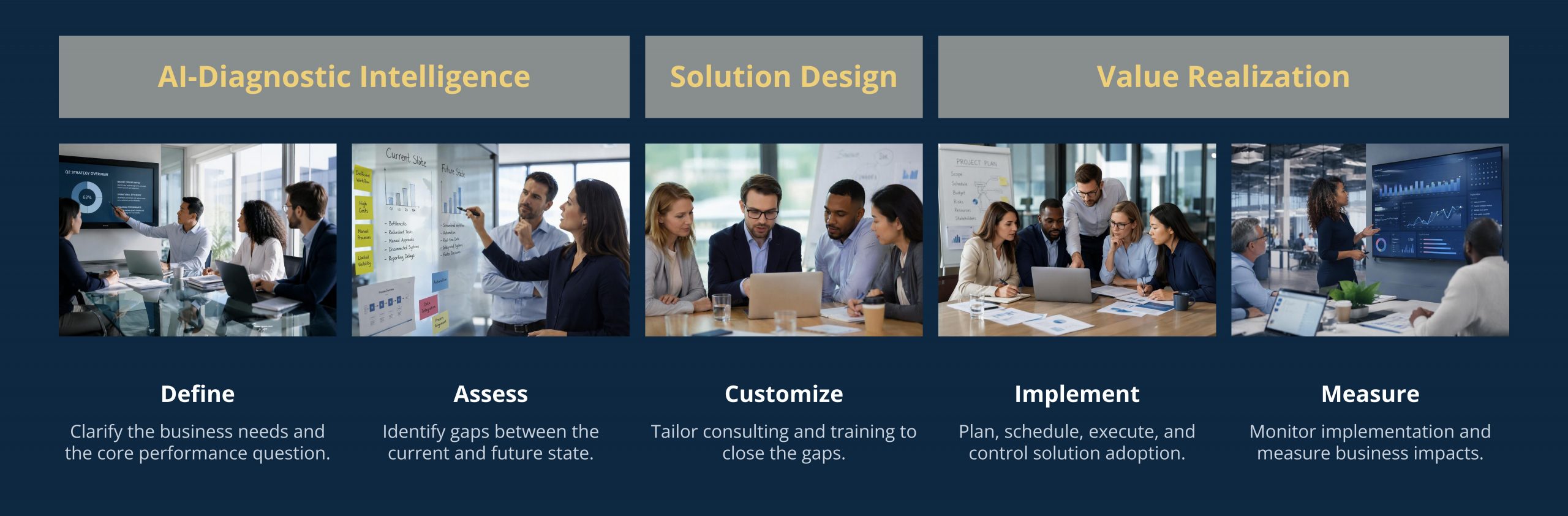
Join the ranks of leading organizations that have partnered with AMS to drive innovation, improve performance, and achieve sustainable success. Let’s transform together, your journey to excellence starts here.