
AI & The Software Design Lifecycle (SDLC)
Professional Development Training Course

AI & the Software Design Lifecycle (SDLC) equips teams with frameworks and controls to integrate AI across development processes. Building on this foundation, the course helps participants understand how AI reshapes design decisions, documentation standards, and cross‑functional collaboration. Learners explore how AI influences requirements, architecture, testing, and deployment, and how to embed responsible‑use principles into every stage of the lifecycle. The result is a practical, end‑to‑end understanding of how to integrate AI in a way that is scalable, compliant, and aligned with enterprise risk expectations.
Participants learn not just how to use AI tools, but when to use them, how to document AI-assisted decisions, how to maintain traceability, and how to prevent the erosion of technical judgment and oversight that can introduce operational or supervisory risk. The course reinforces the importance of human‑in‑the‑loop controls, model‑risk alignment, and defensible decision‑making practices that withstand audit scrutiny. Through guided exercises, teams practice evaluating AI outputs, identifying failure modes, and applying structured review processes that preserve accountability. Participants also learn how to balance productivity gains with long‑term capability development, ensuring that AI enhances, not replaces, the engineering expertise required to maintain resilient systems. By the end of the program, learners are equipped with the confidence and discipline to integrate AI responsibly across the SDLC while supporting organizational readiness and regulatory expectations.
Related Consulting
Related Research
Related Projects
Foundational Course: Delivery & Schedule
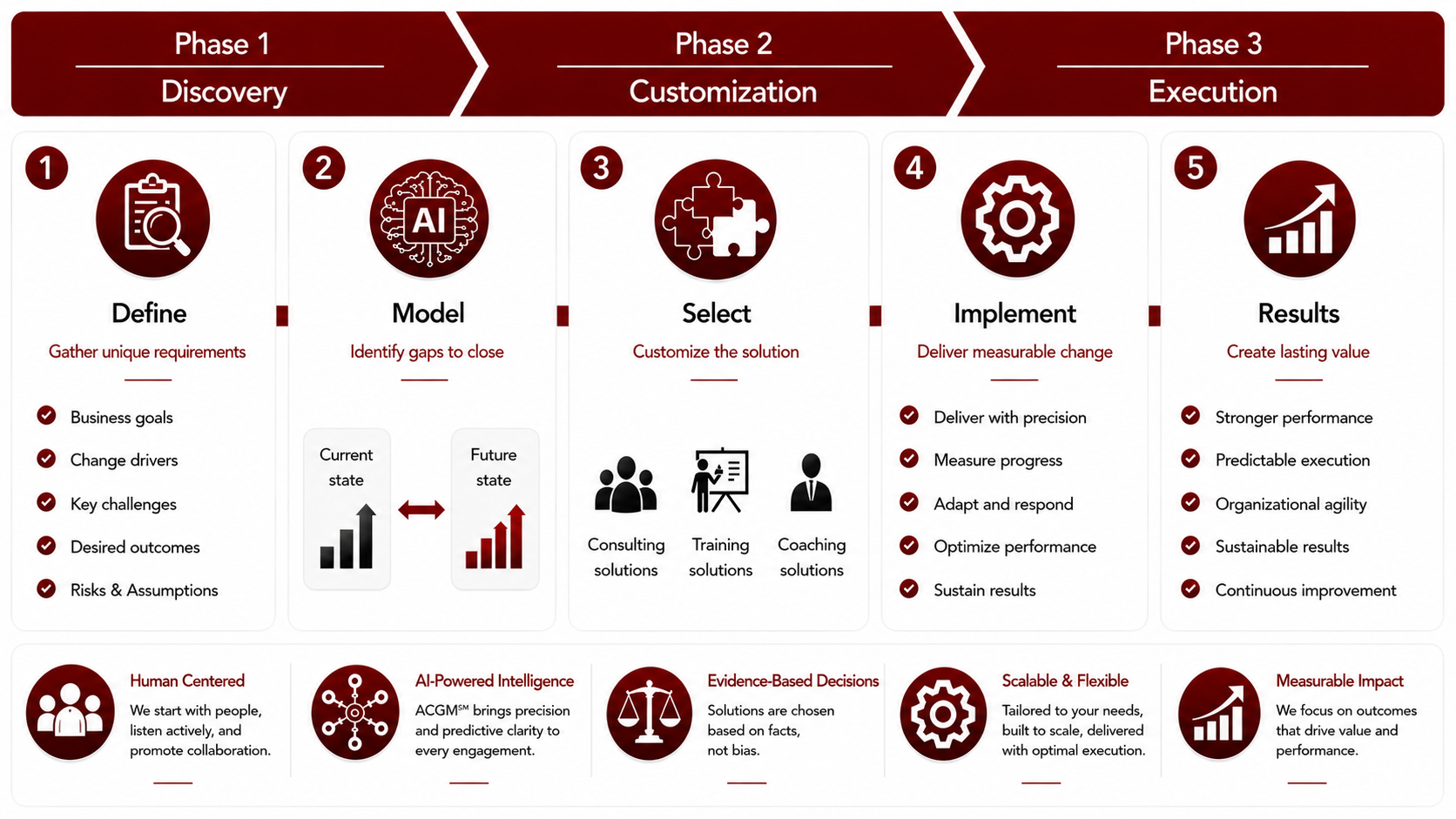
The instructor-led course, as outlined below, is delivered on-site in one full day or virtually in two 3.5-hour sessions. Please explore our ALFSM as seen above to learn more about our customization, flexible durations, and delivery modality options.

Course Modules & Learning Objectives
AI Foundations & Requirements Engineering
Participants learn how AI enhances the software development lifecycle, exploring where augmentation adds value, where human oversight remains essential, and how to maintain compliance, traceability, and defensible decision‑making in regulated environments.
Topics Covered
-
Understanding AI in software development: distinguish augmentation from automation, identify relevant AI tools, determine where human oversight is required, and understand regulatory impacts.
-
AI‑powered requirements gathering: apply AI to synthesize stakeholder and regulatory inputs, surface gaps and conflicts, validate outputs with expert review, and maintain audit‑ready traceability.
-
Predictive planning & estimation: leverage AI for project forecasting and risk estimation, recognize limitations in regulated environments, and balance predictions with documented human judgment.
-
Design & architecture decision support: evaluate AI‑generated recommendations, analyze architectural trade‑offs and secure patterns, and document decisions for audit defensibility.
Activities
- Group discussion
- AI‑augmented requirements review exercise
- Architecture decision‑making scenario practice
AI‑Augmented Development & Code Generation
Participants explore how generative AI accelerates development workflows, strengthens code quality, and enhances engineering productivity while maintaining compliance, security, and professional accountability across the SDLC.
Topics Covered
-
Generative AI for code creation: leverage large language models for secure, compliant code generation, implement AI pair‑programming workflows, and understand the capabilities and limits of AI‑produced code.
-
Code quality, security & compliance: identify vulnerabilities in AI‑generated code, apply structured verification and peer‑review standards, ensure documentation meets governance expectations, and address IP and licensing considerations.
-
Maintaining developer capability: prevent skill atrophy through intentional practice, design balanced oversight workflows, recognize signs of unhealthy AI dependency, and maintain professional accountability in AI‑assisted environments.
-
Refactoring & technical debt management: use AI to identify and prioritize technical debt, apply automated refactoring safely within controls, and leverage AI for legacy documentation and risk exposure analysis.
Activities
- Group discussion
- AI‑assisted code review and refactoring exercise
- Technical‑debt identification and prioritization activity
AI‑Driven Testing, Deployment & Operations
Participants learn how AI enhances testing, deployment, and operational reliability by improving coverage, strengthening monitoring, and supporting compliant, well‑governed release practices across the SDLC.
Topics Covered
-
Intelligent test automation: implement AI‑driven test generation and optimization, balance automation with human oversight, and document validation processes for compliance review.
-
AI in CI/CD pipelines: integrate AI into controlled CI/CD workflows, apply intelligent coverage analysis, enhance deployments with rollback safeguards, and maintain change‑management controls.
-
Intelligent operations & monitoring: deploy predictive monitoring responsibly, detect drift or anomalous behavior, and implement structured incident documentation and escalation protocols.
-
Production learning & continuous improvement: use AI to analyze operational patterns, drive improvement without bypassing governance gates, and maintain transparency in AI‑enabled environments.
Activities
- Group discussion
- AI‑assisted test‑case generation and validation exercise
- Operational monitoring and incident‑response scenario practice
Governance, Ethics & Building AI‑Capable Teams
Participants examine the governance, ethical, and organizational practices required to deploy AI responsibly, ensuring fairness, transparency, and strong human oversight while building resilient, high‑performing AI‑enabled teams.
Topics Covered
-
AI governance & model risk management: establish guardrails for AI usage, align SDLC integration with model‑risk practices, meet documentation and audit standards, and define clear oversight roles.
-
Ethics, bias & responsible AI: detect and mitigate bias, understand fairness implications in financial systems, and apply accountability and transparency frameworks to AI‑assisted decisions.
-
Recognizing AI dependency risk: identify signs of unhealthy over‑reliance, understand when augmentation shifts toward substitution, and implement practices that preserve professional judgment and oversight.
-
Building sustainable AI‑capable teams: design SDLC processes that strengthen resilience, create governance‑aligned norms for AI usage, and develop actionable plans for responsible integration.
Activities
- Group discussion
- Bias‑identification and mitigation scenario exercise
- AI‑governance and oversight framework workshop
Capstone Exercise & Personal Action Plan
Participants apply course concepts in a realistic exercise that strengthens their ability to use new skills and build a continuous learning path, supported by self‑directed accountability through their personal action plan.
Skills Application
- AI‑supported analysis: distinguish augmentation from automation, validate AI outputs, and apply appropriate human oversight in regulated environments.
- Requirements synthesis: use AI to surface gaps, reconcile conflicting inputs, and maintain clear, audit‑ready traceability across stakeholder needs.
- AI‑assisted development: generate secure, compliant code with LLMs, apply structured verification, and manage technical debt through responsible refactoring.
- Testing & deployment: apply AI‑driven test generation, strengthen CI/CD workflows, and document validation steps to support governance and change‑management controls.
- Operational monitoring: detect drift and anomalies using AI‑enabled monitoring tools while following structured escalation and incident‑response practices.
- Responsible AI & governance: identify bias, uphold fairness and transparency standards, and build sustainable team norms aligned with model‑risk and oversight expectations.
Training Methodology & Materials
This course uses a blend of interactive learning methods and materials designed to reinforce practical skill application and deepen participant engagement.
Methodology
- Facilitated discussion: explore key concepts collaboratively and build shared understanding through guided conversation.
- Scenario‑based learning: apply concepts to realistic situations that mirror day‑to‑day challenges and decision‑making.
- Role plays: practice communication, negotiation, and relationship‑building skills in a safe, supportive environment.
- Small group exercises: work in teams to analyze situations, solve problems, and reinforce collaborative learning.
Materials
- Participant guide & notes
- Course specific worksheets
- Tips to apply what you have learned
- Exercise narratives
- Action planning template
Upon Completion, Participants Will Be Able To
This course is designed for teams integrating AI into the SDLC within complex and/or regulated environments, helping organizations increase development velocity while strengthening governance discipline. Participants learn to boost productivity without eroding core skills, improve code quality through earlier defect detection, and maintain documentation integrity required for audit defensibility.
Through structured frameworks and real‑world scenarios, teams establish shared AI standards that enhance collaboration across engineering, risk, compliance, and internal audit. At the enterprise level, organizations reduce time‑to‑market, lower technical debt, strengthen model‑validation posture, and mitigate supervisory, security, and vendor‑dependency risks, often realizing measurable gains within three to six months while advancing regulatory alignment and operational resilience.
How AMS Can Help
We are uniquely positioned to strengthen capability across the entire organization through a structured, modern training approach grounded in our Adaptive Learning Framework℠ (ALF), and driven by our Structural Sequencing & Governance Diagnostic℠ (SSGD).
With senior-level facilitators, highly customizable courses, and multiple delivery modalities, we design learning experiences that meet participants at every level, from executives to emerging professionals, and accelerate real-world application. The ALF℠ ensures knowledge transfer at each stage, enabling individuals and teams to absorb core concepts, practice new skills, and sustain improved performance over time. This integrated approach deepens capability, enhances alignment, and results in learning that is fully embedded, practical, and built to last.
Join the ranks of leading organizations that have partnered with AMS to drive innovation, improve performance, and achieve sustainable success. Let’s transform together, your journey to excellence starts here.