
Requirements Elicitation Techniques
Training Course
Strengthen requirements accuracy through stakeholder analysis, elicitation discipline, traceability, and communication.

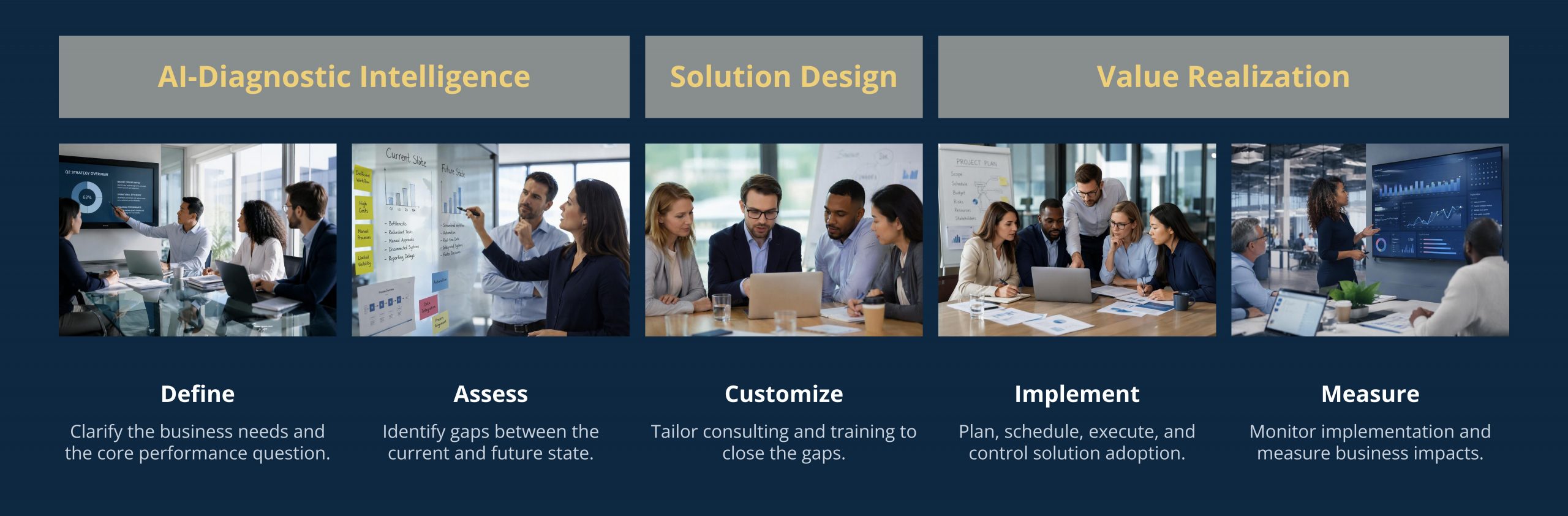
Requirements Elicitation Techniques helps organizations develop business analysts, project managers, technical leads, software developers, and cross-functional delivery teams that need to reduce rework and improve the accuracy of project requirements. Anchored in our 4x4 Instructional Design Model℠ and AI-Powered Diagnostic & Customization Framework℠, the course meets participants at the right level, guides practical skill application, and helps teams build the stakeholder fluency, documentation discipline, and requirements confidence needed to translate business needs into clearer solution direction. Depending on selected modular content, customization needs, delivery modality, and client purpose, the experience can range from a focused 90-minute session to a multi-day program of up to three full days, creating a flexible, action-learning pathway for scalable requirements elicitation capability development. This course can also be stacked within a solution set to support AMS Advisory consulting solutions.
Course Description

Learning Themes
This course is built around selected learning themes informed by current trends, research, and established talent models:
- Enterprise Analysis Foundations, Scope Definition, Strategy Distinction, and Value Creation
- Business Case Development, Solution Scope, Feasibility, and Strategic Alignment
- Requirements Elicitation Fundamentals, Guiding Questions, Prototyping, and Completeness Review
- Requirements Prioritization, Traceability, Validation, Business Value, and Lifecycle Adaptability
- Critical Communication, Escalation Pathways, Stakeholder Engagement, and Practical Integration
Course Customization
Applying the AI-Powered Diagnostic & Customization Framework℠ and 4x4 Training Design Model℠ calibrates the course for:
- Pre-Training Survey Insights and Cohort Readiness Patterns
- Requirements Experience Level, Role Mix, and Project Delivery Context
- Client Requirements Practices, Stakeholder Environment, Governance Needs, and Rework Reduction Priorities
- Selected Modular Content, Duration, and Delivery Modality
- Scenario, Exercise, Case Example, and Application Emphasis
Applied Learning Outcomes
Engaging participants through scenario-driven practice and action-learning activities may include:
- Enterprise Analysis Scope and Value Mapping Exercise
- Business Case and Solution Scope Development Workshop
- Requirements Elicitation Question Design and Prototyping Practice
- Requirements Prioritization and Traceability Mapping Activity
- Stakeholder Communication and Escalation Scenario Simulation
- Requirements Integration Action Plan and Project Application Exercise


Activity Design
Engaging participants through scenario-driven practice and action-learning activities may include:
- Enterprise Analysis Scope and Value Mapping Exercise
- Business Case and Solution Scope Development Workshop
- Requirements Elicitation Question Design and Prototyping Practice
- Requirements Prioritization and Traceability Mapping Activity
- Stakeholder Communication and Escalation Scenario Simulation
- Requirements Integration Action Plan and Project Application Exercise
Skills in Practice
Applying requirements elicitation skills enables participants to:
- Gather Requirements with Greater Accuracy, Clarity, and Stakeholder Alignment
- Document Business Needs, Solution Boundaries, and Requirements Decisions More Consistently
- Use Traceability to Connect Requirements to Business Value, Scope, and Delivery Outcomes
- Reduce Rework by Validating Expectations, Risks, Dependencies, and Acceptance Criteria Earlier
- Engage Stakeholders Through Clear Communication, Feedback Loops, and Escalation Pathways
- Embed Elicitation Practices into Project Frameworks, Agile Delivery, and Enterprise Workflows
Collaborative Engagement Model
Join the ranks of leading organizations that have partnered with AMS to drive innovation, improve performance, and achieve sustainable success. Let’s transform together, your journey to excellence starts here.