
AI Adoption & Integration Leadership
Training Course
Lead enterprise AI adoption and integration through task-force design, sponsor alignment, champion networks, governance connection, and sustained behavior change.

AI Adoption & Integration Leadership helps organizations develop AI adoption task forces, executive sponsors, change champions, stakeholder networks, transformation teams, managers, and cross-functional integration groups that need to steward AI adoption from isolated interest to coordinated enterprise practice. Anchored in the 4x4 Instructional Design Model℠ and AI-Powered Diagnostic & Customization Framework℠, the course is differentiated from general change-resilience programs by focusing specifically on the leadership system required to distribute AI capability, integrate AI-enabled ways of working, and sustain adoption across the enterprise.
Participants learn how to structure task-force roles, align sponsor coalitions, activate champion networks, map stakeholder impact, build adoption narratives, connect change activity to governance and responsible-use guardrails, coordinate communications and enablement, surface resistance, measure adoption signals, and reinforce new AI-enabled behaviors until they become part of the organization’s operating rhythm. The course treats AI adoption and integration as a people, process, culture, governance, and workflow-embedding challenge, not simply a technology rollout or resilience topic. Depending on selected modular content, customization needs, delivery modality, and client purpose, the experience can range from a focused 90-minute sponsor or task-force session to a multi-day program of up to three full days, creating a flexible, action-learning pathway for scalable AI adoption, integration, and leadership capability development. This course can also be stacked within a solution set to support AMS Advisory consulting solutions.
Course Description

Learning Themes
This course is built around selected learning themes informed by current trends, research, and established talent models:
- AI Adoption Task Force Design, Sponsor Coalitions, Champion Networks, and Enterprise Integration Roles
- Adoption Strategy, Stakeholder Impact Mapping, Readiness Signals, Resistance Patterns, and Change Friction
- AI Narrative, WIIFM Messaging, Trust Building, Job-Impact Conversations, and Credible Communication Rhythm
- Governance-Connected Rollout, Responsible-Use Guardrails, Escalation Paths, and Policy-to-Practice Alignment
- Role-Based Enablement, Peer-Led Adoption, Workflow Embedding, Measurement, Feedback Loops, and Reinforcement
- Pilot-to-Scale Coordination, Adoption Operating Cadence, Leadership Visibility, and Sustained Behavior Change
Course Customization
Applying the AI-Powered Diagnostic & Customization Framework℠ and 4x4 Training Design Model℠ calibrates the course for:
- Pre-Training Survey Insights, AI Adoption Readiness Patterns, Sponsor Alignment, and Champion-Network Maturity
- Task Force Composition, Executive Sponsorship, Functional Representation, Governance Touchpoints, and Stakeholder Reach
- Client AI Rollout Context, Approved Tools, Responsible-Use Expectations, Integration Priorities, and Adoption Barriers
- Role Impact, Workflow Change, Communication Needs, Training Requirements, Trust Gaps, and Resistance Drivers
- Selected Modular Content, Duration, Delivery Modality, Task Force Workshop Depth, and Rollout Planning Emphasis
- Scenario, Exercise, Case Example, Sponsor Briefing, Champion Playbook, Adoption Dashboard, and Action Plan Focus
Applied Learning Outcomes
Converting AI adoption leadership concepts into practical workplace behaviors enables participants to:
- Define the Purpose, Membership, Decision Rights, and Operating Cadence of an AI Adoption Task Force
- Align Sponsors, Champions, Functional Leaders, Risk Partners, Technology Teams, and End-User Stakeholders
- Map Stakeholder Impact, Readiness, Trust Gaps, Workflow Changes, Role Implications, and Adoption Risks
- Build Credible AI Adoption Narratives that Explain Why, What Changes, What Stays Human, and How Support Will Work
- Connect Rollout Activity to Governance, Responsible-Use Guardrails, Escalation Paths, and Approved-Tool Expectations
- Design Champion-Led Enablement, Feedback Loops, Adoption Metrics, Reinforcement Routines, and Integration Checkpoints


Activity Design
Engaging participants through task-force simulation, stakeholder planning, and action-learning activities may include:
- AI Adoption Task Force Charter Exercise Defining Purpose, Membership, Decision Rights, Cadence, and Success Measures
- Sponsor Coalition and Champion Network Mapping Activity
- Stakeholder Impact, Readiness, Resistance, and Trust-Gap Assessment Scenario
- AI Adoption Narrative and WIIFM Communication Workshop for Different Audiences
- Governance-to-Practice Rollout Planning Covering Approved Tools, Guardrails, Escalation, and Responsible Use
- Champion-Led Enablement and Peer Adoption Sprint Design Activity
- Adoption Dashboard, Feedback Loop, Reinforcement Plan, and Pilot-to-Scale Integration Workshop
Skills in Practice
Applying AI change leadership skills enables participants to:
- Stand Up AI Adoption Task Forces that Translate Strategy into Coordinated Rollout and Integration Work
- Build Sponsor Alignment and Champion Networks that Create Credibility, Momentum, and Peer-Led Adoption
- Diagnose Adoption Barriers Across Trust, Skills, Workflow Fit, Governance Clarity, and Job-Impact Concerns
- Communicate AI Change with Practical WIIFM Messaging, Transparency, Empathy, and Consistent Leadership Signals
- Coordinate Rollout with Governance, Responsible-Use Guardrails, Enablement, Measurement, and Escalation Paths
- Move AI from Pilot Interest to Embedded Enterprise Practice Through Reinforcement, Feedback, and Adoption Metrics
Collaborative Engagement Model
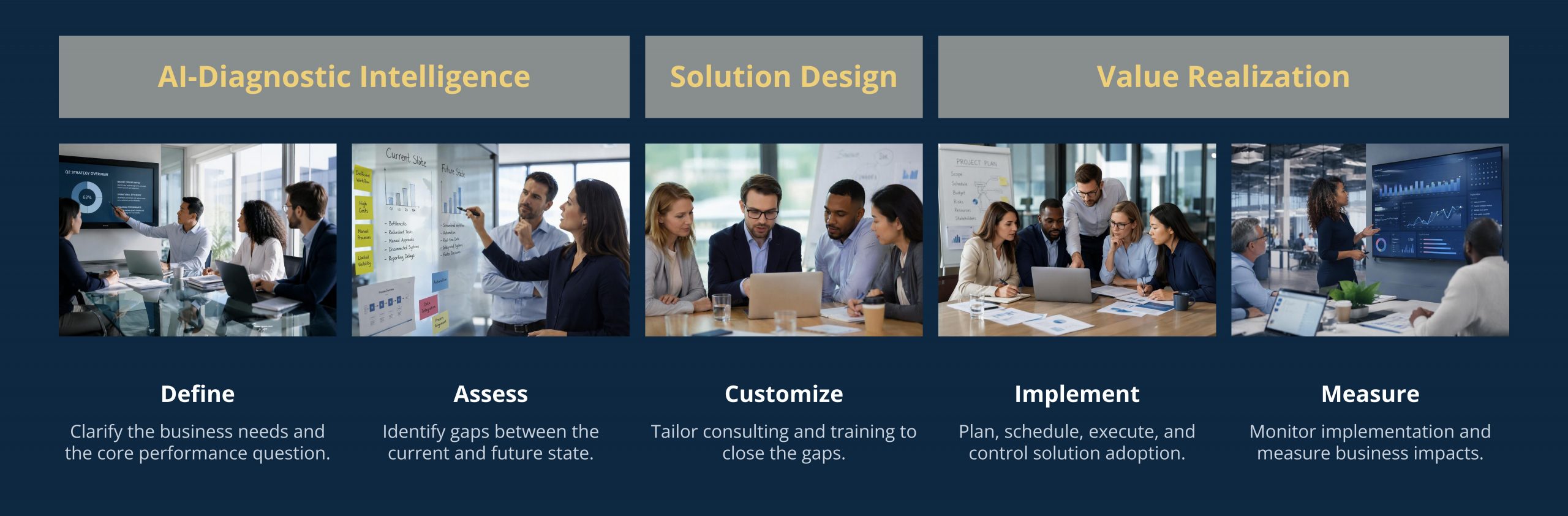
Join the ranks of leading organizations that have partnered with AMS to drive innovation, improve performance, and achieve sustainable success. Let’s transform together, your journey to excellence starts here.