
AI Driven Workflow Optimization
Training Course
Optimize enterprise workflows through AI-augmented value stream mapping, structural redesign, compliance-ready execution, and measurable process performance.

AI Driven Workflow Optimization helps organizations develop operations leaders, process owners, PMO teams, workflow managers, transformation groups, technology partners, and cross-functional stakeholders that need to improve how work moves across functions, systems, handoffs, controls, and decision points. Anchored in our 4x4 Instructional Design Model℠ and AI-Powered Diagnostic & Customization Framework℠, the course focus is toward AI-augmented value stream mapping, process optimization, structural workflow redesign, and measurable execution improvement.
Participants learn to map current-state workflows, identify redundancy, waste, manual workarounds, cycle-time failure, legacy system friction, compliance gaps, unclear ownership, and cross-functional handoff breakdowns, then use AI-supported analysis to design future-state workflows, prioritize improvement opportunities, assess automation readiness, embed governance and controls, and sequence a practical optimization roadmap. The course treats AI as an accelerator of process visibility, structural diagnosis, and operating redesign, not as a shortcut for automating broken workflows. Depending on selected modular content, customization needs, delivery modality, and client purpose, the experience can range from a focused 90-minute session to a multi-day program of up to three full days, creating a flexible, action-learning pathway for scalable AI-driven workflow optimization capability development. This course can also be stacked within a solution set to support AMS Advisory consulting solutions.
Course Description

Learning Themes
This course is built around selected learning themes informed by current trends, research, and established talent models:
- Value Stream Mapping, Current-State Workflow Analysis, Process Visibility, and End-to-End Work Movement
- AI-Augmented Process Diagnosis, Structural Waste, Redundancy, Bottlenecks, Rework, and Cycle-Time Failure
- Cross-Functional Handoff Design, Ownership Clarity, Governance Gaps, Controls, and Compliance-Ready Workflow Discipline
- Future-State Workflow Architecture, Standardization, Automation Readiness, Technology Activation, and Human-in-the-Loop Design
- Process Optimization Roadmaps, Sequenced Transformation, Performance Metrics, Failure Architecture, and Continuous Improvement
- Enterprise Execution Visibility, Operating Rhythm, Stakeholder Ownership, Adoption Capacity, and Sustainable Workflow Performance
Course Customization
Applying the AI-Powered Diagnostic & Customization Framework℠ and 4x4 Training Design Model℠ calibrates the course for:
- Pre-Training Survey Insights, Workflow Pain Points, Process Maturity, and Operational Readiness Patterns
- Role Mix Across Process Owners, PMO, Operations, Technology, Compliance, Managers, and Working-Level Practitioners
- Client Process Architecture, Value Streams, Governance Requirements, Compliance Expectations, and Execution Priorities
- Current-State Inputs — Process Maps, System Handoffs, SOPs, Tickets, Metrics, Survey Findings, Focus Group Data, and Observation Notes
- Optimization Scope, Automation Readiness, Legacy System Friction, Manual Workarounds, Ownership Gaps, and Adoption Constraints
- Selected Modular Content, Duration, Delivery Modality, Value Stream Mapping Depth, and Future-State Design Emphasis
- Scenario, Exercise, Case Example, Failure Architecture Map, Optimization Roadmap, Governance, and Measurement Focus
Applied Learning Outcomes
Converting AI-driven workflow optimization concepts into practical workplace behaviors enables participants to:
- Map Current-State Workflows Across Functions, Systems, Inputs, Decisions, Handoffs, Controls, and Outputs
- Use AI-Supported Analysis to Identify Redundancy, Waste, Bottlenecks, Rework, Cycle-Time Risk, and Root Causes
- Distinguish Collaboration Friction from Structural Workflow Failure, Governance Gaps, and Process Design Defects
- Design Future-State Workflows that Clarify Ownership, Standardize Handoffs, Embed Controls, and Improve Execution Visibility
- Prioritize Optimization Opportunities Based on Value, Feasibility, Compliance Impact, Automation Readiness, and Adoption Capacity
- Build Sequenced Transformation Roadmaps with Named Owners, Metrics, Feedback Loops, and Continuous Improvement Routines


Activity Design
Engaging participants through value stream mapping, process redesign, and action-learning activities may include:
- Current-State Value Stream Mapping Exercise Covering Work Movement, Handoffs, Delays, Decisions, and Controls
- Process Waste, Redundancy, Manual Workaround, and Cycle-Time Failure Diagnostic Activity
- Failure Architecture Mapping Workshop to Show How Governance, Ownership, and System Friction Create Execution Variability
- Future-State Workflow Design Lab Focused on Standardization, Compliance Readiness, and Cross-Functional Accountability
- Automation Readiness and AI-Augmented Workflow Opportunity Prioritization Scenario
- Optimization Roadmap Sequencing Activity Across People, Process, Organization, Technology, Controls, and Adoption
- Workflow Performance Dashboard, Metric, Feedback Loop, and Continuous Improvement Action Plan Workshop
Skills in Practice
Applying AI-driven workflow optimization skills enables participants to:
- See How Work Actually Flows Across Teams, Systems, Decisions, Exceptions, and Control Points
- Diagnose Structural Sources of Delay, Redundancy, Rework, Compliance Exposure, and Execution Variability
- Use Value Stream Thinking to Separate Symptoms from Root Causes and Prioritize Upstream Corrective Action
- Redesign Workflows for Clearer Ownership, Stronger Handoffs, Better Visibility, and Compliance-Ready Execution
- Identify Where AI, Automation, and Human Judgment Should Be Applied Within the Future-State Process
- Create Roadmaps that Sequence Optimization, Technology Activation, Governance, Training, and Sustainable Performance Improvement
Collaborative Engagement Model
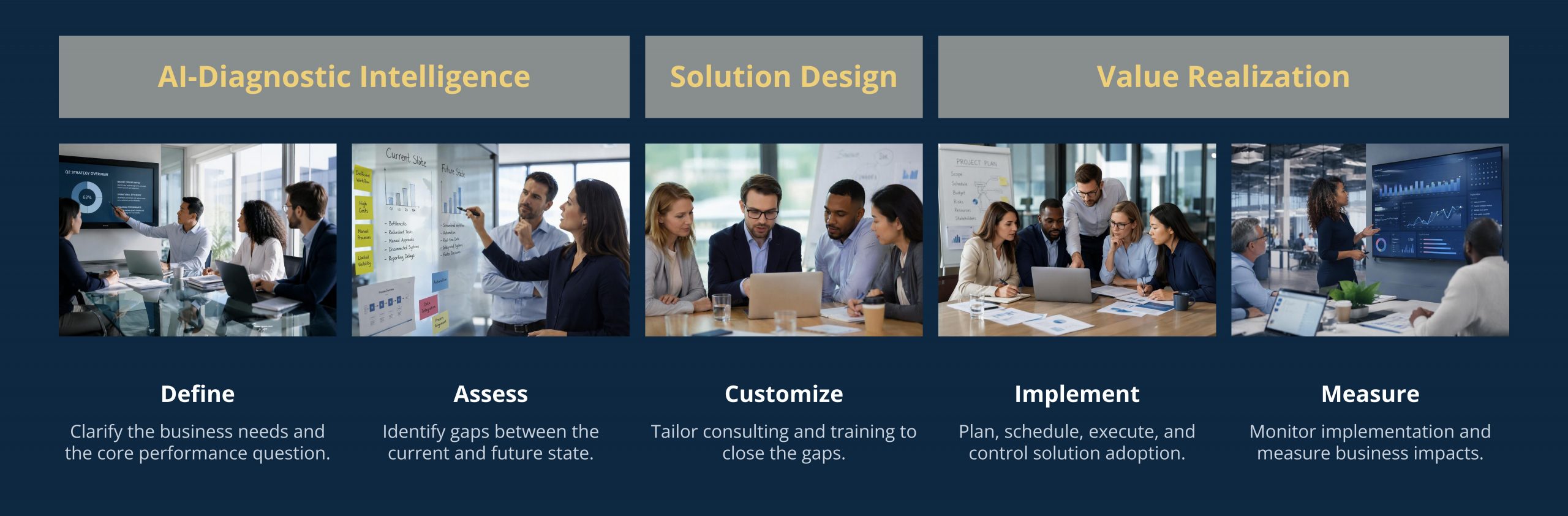
Join the ranks of leading organizations that have partnered with AMS to drive innovation, improve performance, and achieve sustainable success. Let’s transform together, your journey to excellence starts here.